-
×
 NT Pristine Endodontic Sinus Elevator (SDI 13/01)
1 × ₹2,050.00
NT Pristine Endodontic Sinus Elevator (SDI 13/01)
1 × ₹2,050.00
Subtotal: ₹2,050.00

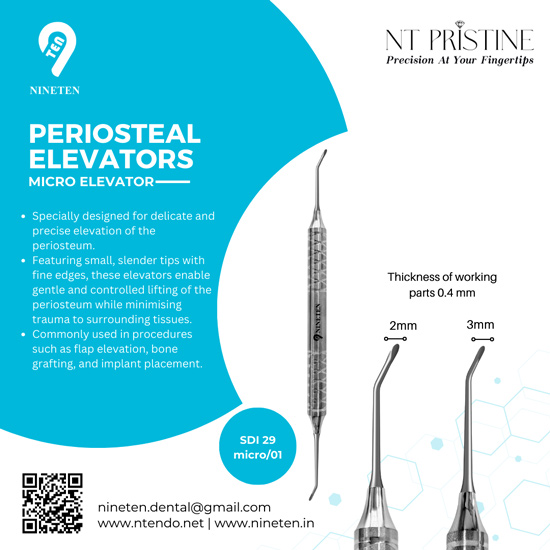
The NT Pristine Periosteal Elevator – Micro Elevator (SDI 29 Micro/01) is designed for delicate and precise elevation of the periosteum during oral surgical procedures. Its slim and finely shaped tips allow you to work in confined areas where detailed control is required.
With working widths of 2 mm and 3 mm and a thickness of 0.4 mm, the instrument is suitable for micro-level tissue manipulation. It allows gentle lifting of the periosteum while minimizing trauma to surrounding tissues, making it useful in procedures where precision is critical.
You can use this instrument in flap elevation, bone grafting, and implant placement procedures that require careful tissue handling.
Key points for your practice:
This instrument fits well in workflows where accuracy, control, and tissue preservation are important.
Choose this micro elevator when you need high precision and controlled performance in delicate procedures. It supports consistent and accurate surgical outcomes.
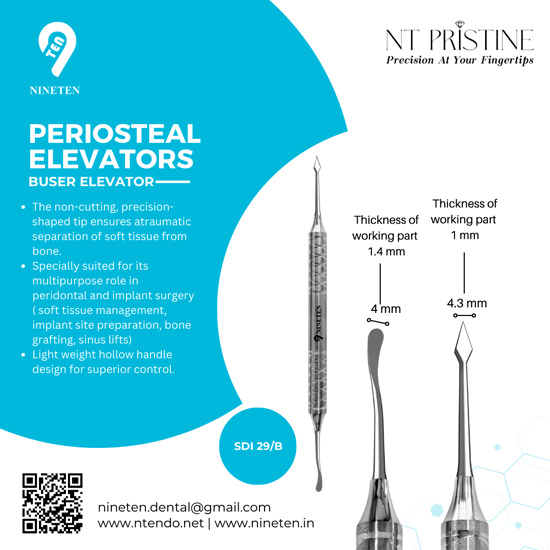
The NT Pristine Periosteal Elevator – Buser Elevator (SDI 29/B) is designed for atraumatic separation of soft tissue from bone during oral surgical procedures. Its non-cutting, precision-shaped tip allows you to reflect and elevate tissue with better control while minimizing damage.
The instrument features dual working ends that support both broad tissue elevation and fine surgical manipulation. With working widths of 4 mm and 4.3 mm, and thicknesses of 1.4 mm and 1 mm, it provides a balance between strength and precision.
You can use this elevator in periodontal surgery, implant placement, bone grafting, and sinus lift procedures where accurate tissue management is required.
Key points for your practice:
This instrument fits well in workflows where precision, control, and tissue safety are essential.
Choose this Buser elevator when you need consistent performance and controlled tissue handling. It helps you work with precision across multiple surgical procedures.
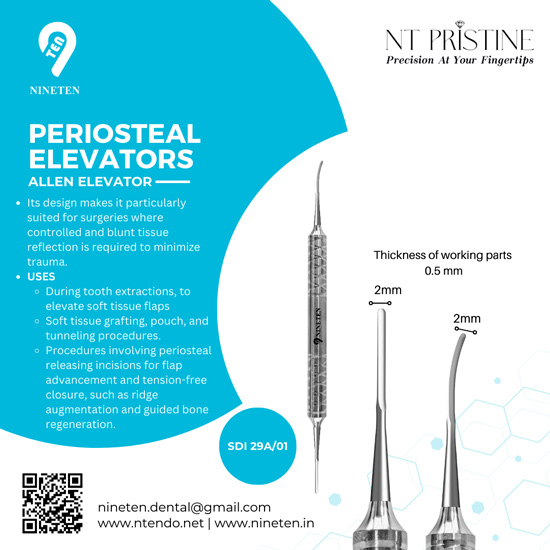
The NT Pristine Periosteal Elevator – Allen Elevator (SDI 29A/01) is designed for controlled and atraumatic reflection of soft tissues during oral surgical procedures. Its slim working ends allow you to perform precise flap elevation while minimizing tissue trauma.
With a working width of 2 mm and thickness of 0.5 mm, the instrument is suitable for detailed surgical applications where accuracy is important. It is commonly used in tooth extractions, soft tissue grafting, pouch and tunneling techniques, and procedures involving periosteal releasing incisions.
The design supports smooth tissue reflection, helping you maintain tissue integrity during surgery.
Key points for your practice:
This instrument fits well in workflows where precision, control, and tissue safety are critical.
Choose this Allen elevator when you need better control and minimal tissue trauma during surgical procedures. It supports accurate and reliable performance in delicate cases.
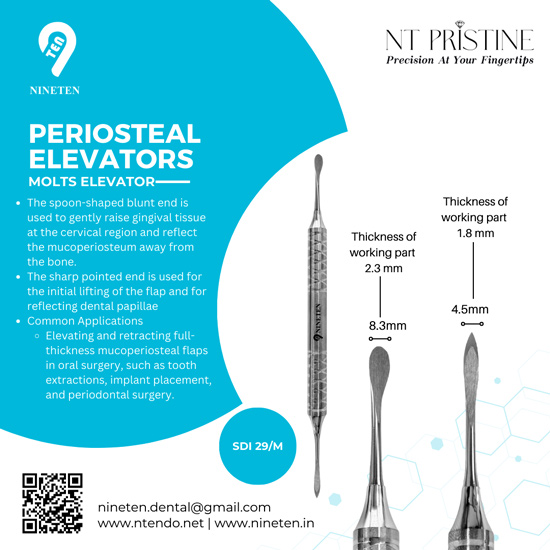
The NT Pristine Periosteal Elevator – Molts Elevator (SDI 29/M) is designed for elevation and reflection of mucoperiosteal flaps during oral surgical procedures. It features a dual-ended design with a spoon-shaped blunt end and a sharp pointed end, allowing you to perform both gentle tissue elevation and initial flap lifting with a single instrument.
The blunt end is used to raise gingival tissue and reflect mucoperiosteum from the bone with minimal trauma, while the pointed end helps initiate flap elevation and reflect dental papillae with precision.
The working end dimensions (8.3 mm width and 2.3 mm thickness for blunt end, 4.5 mm width and 1.8 mm thickness for pointed end) provide a balance between control and effectiveness during procedures.
Key points for your practice:
This instrument fits well in surgical workflows where precision, efficiency, and tissue safety are important.
Choose this Molts elevator when you need consistent flap control and efficient surgical handling. It supports precise tissue management in routine and advanced procedures.
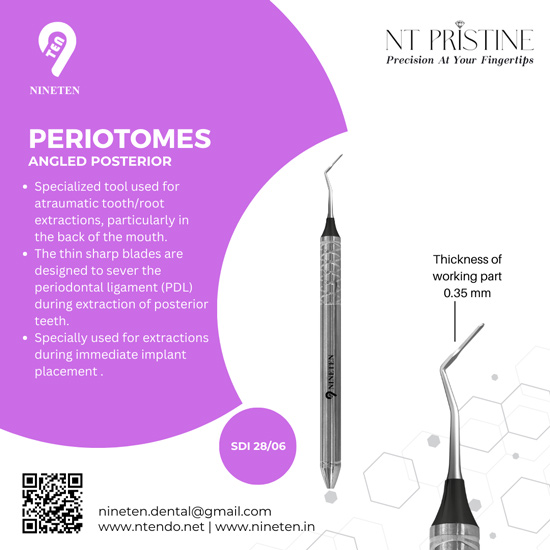
NT Periotomes – Angled Posterior SDI 28/06 is designed for precise and atraumatic extraction in posterior regions where access is limited. It features an angled working tip that allows you to reach deeper areas of the mouth without adjusting your hand position excessively. This improves control and makes procedures more efficient.
The working tip has a thickness of approximately 0.35 mm, allowing easy entry into the periodontal ligament space. You can separate ligament fibers with minimal force, reducing trauma to surrounding bone and soft tissue. This is especially important in cases where tissue preservation is required.
The angled design supports better ergonomics and helps you maintain a stable working position. The textured handle provides a firm grip, ensuring consistent control during use.
This instrument is suitable for posterior tooth extraction, root removal, and implant preparation. If your goal is clean extraction with minimal damage in hard-to-reach areas, this tool fits directly into your clinical workflow.
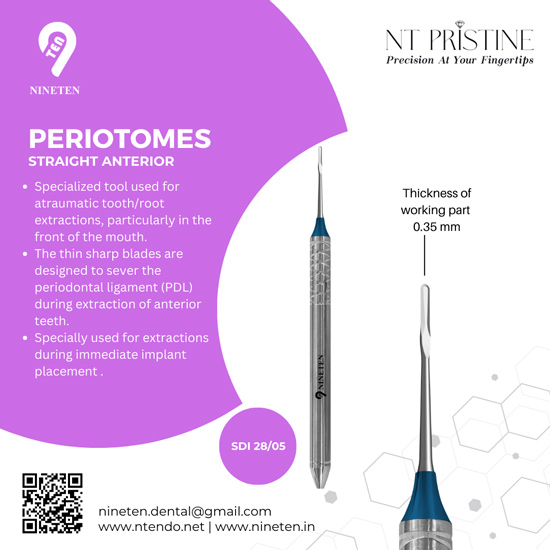
NT Periotomes – Straight Anterior SDI 28/05 is designed for precise and atraumatic extraction of anterior teeth and roots. It features a straight, ultra-thin working tip that allows direct access in the front region of the mouth. This helps you perform procedures with better control and minimal tissue damage.
The working tip has a thickness of approximately 0.35 mm, allowing easy entry into the periodontal ligament space. You can separate ligament fibers with less force, reducing trauma to surrounding bone and soft tissue. This is especially useful in cases where preserving the extraction site is important.
The straight design supports accurate handling and stable positioning during procedures. You avoid unnecessary wrist movement and maintain consistent control. The textured handle ensures a firm grip, even during longer sessions.
This instrument is suitable for atraumatic extraction, root removal, and implant preparation. If your focus is precision and clean extraction in anterior cases, this tool fits directly into your clinical workflow.
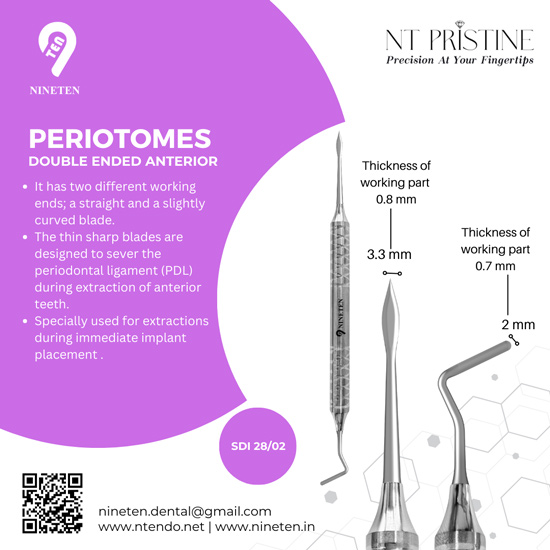
NT Periotomes – Double Ended Anterior SDI 28/02 is designed for precise and atraumatic tooth extraction in anterior regions. It features two working ends—a straight blade and a slightly curved blade—so you can handle different access angles without switching instruments. This improves workflow and keeps your procedure smooth and controlled.
The working tips have a thickness of approximately 0.7 mm to 0.8 mm, allowing easy entry into the periodontal ligament space. You can separate ligament fibers with minimal force, which reduces trauma to surrounding bone and soft tissue. This is important when you aim for better healing and predictable outcomes.
The dual-tip design includes approximate working widths of 3.3 mm and 2 mm. This gives you flexibility during procedures, from initial entry to fine precision work. The angled structure also helps you maintain proper hand positioning while working in restricted areas.
The textured handle provides a secure grip and improves control during use. This instrument is suitable for atraumatic extraction, implant preparation, and cases where tissue preservation is essential. It supports a clean and efficient clinical workflow.
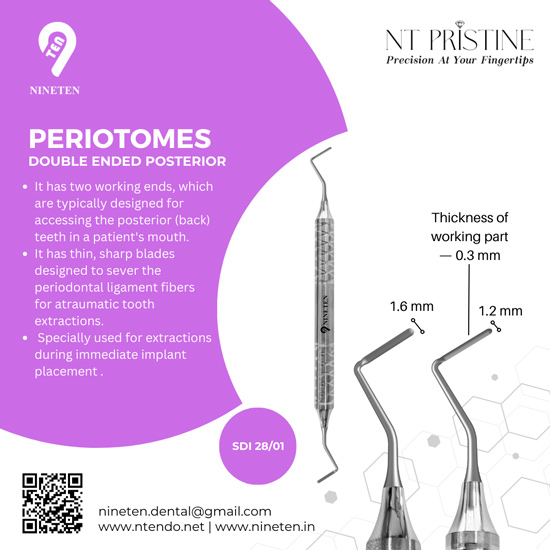
NT Periotomes – Double Ended Posterior SDI 28/01 is built for precise, atraumatic tooth extraction in posterior regions. It features a double-ended design with two working tips (1.6 mm and 1.2 mm), allowing you to handle different clinical situations without switching instruments. This improves efficiency and keeps your workflow smooth during procedures.
The ultra-thin working ends, with a thickness of approximately 0.3 mm, help you enter the periodontal ligament space easily. You can sever ligament fibers with better control and minimal force. This reduces trauma to surrounding bone and soft tissue, which is important when you aim for faster healing and better outcomes.
The angled design supports access in hard-to-reach posterior areas. You maintain a stable hand position and avoid unnecessary wrist strain. The textured handle provides a firm grip, giving you consistent control even during longer procedures.
This instrument works well for atraumatic extractions, implant preparation, and cases where bone preservation matters. If you want clean extraction with minimal damage, this tool fits directly into your daily clinical workflow.
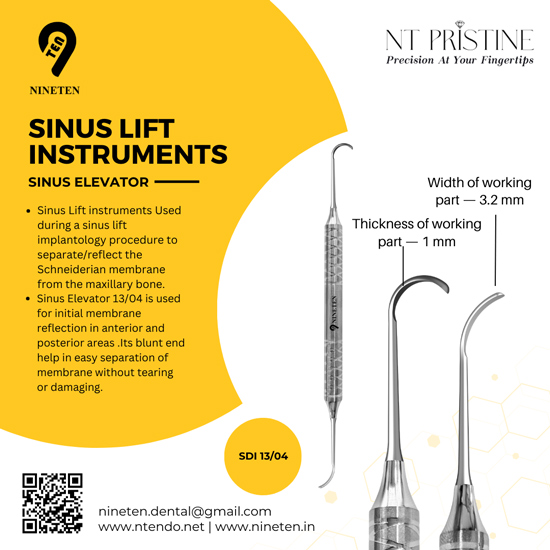
The NT Pristine Endodontic Sinus Elevator (SDI 13/04) is designed for initial reflection of the Schneiderian membrane during sinus lift procedures. It is suitable for use in both anterior and posterior sinus regions, where controlled and gentle handling is required at the start of the procedure.
Its blunt working tip allows you to separate the membrane smoothly without tearing or damaging surrounding tissues. This makes it useful for the early stage of sinus augmentation, where maintaining membrane integrity is critical.
The working tip dimensions (3.2 mm width and 1 mm thickness) provide a balance between surface area and precision, helping you perform controlled movements during reflection.
Key points for your practice:
This instrument fits well in surgical workflows where safety, precision, and control are important.
Choose this sinus elevator when you need a safer start to membrane elevation. It helps you work with better control and reduced risk during critical initial steps.
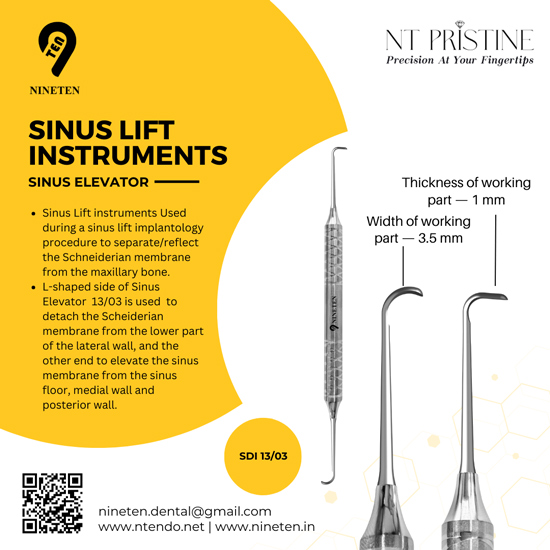
The NT Pristine Endodontic Sinus Elevator (SDI 13/03) is designed to support controlled detachment and elevation of the Schneiderian membrane during sinus lift procedures. Its L-shaped working design allows you to access multiple regions of the sinus, including the lateral wall, sinus floor, medial wall, and posterior areas.
One end of the instrument helps you detach the membrane from the lower lateral wall, while the other end supports elevation across different sinus surfaces. This reduces the need for multiple instruments during procedures.
The working tip dimensions (3.5 mm width and 1 mm thickness) provide a balance between strength and precision, allowing controlled handling during delicate surgical steps.
Key points for your practice:
This instrument fits well in surgical workflows where access, control, and consistency are important.
Choose this sinus elevator when you need reliable performance across different sinus regions. It helps you work with better control and precision during implant procedures.
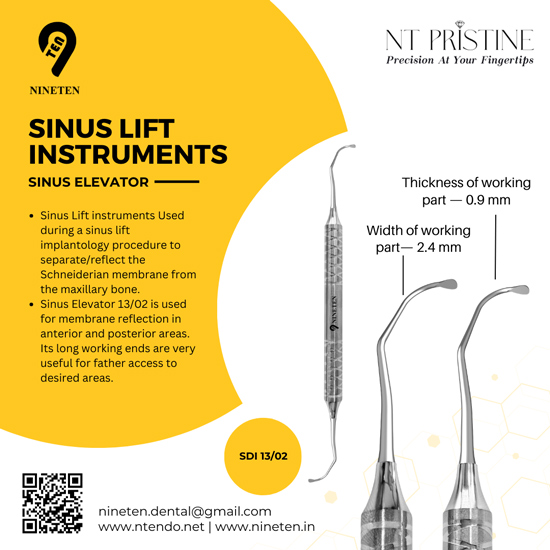
The NT Pristine Endodontic Sinus Elevator (SDI 13/02) is designed to support controlled reflection and elevation of the Schneiderian membrane during sinus lift procedures. It is suitable for use in both anterior and posterior sinus regions, where precise handling and access are required.
Its long working ends allow you to reach deeper areas inside the sinus cavity, making it easier to perform membrane elevation without switching instruments. The working tip dimensions (2.4 mm width and 0.9 mm thickness) provide a balance between strength and precision, helping you maintain control during delicate movements.
You can use this instrument to separate and reflect the membrane smoothly while reducing the risk of damage during surgical procedures.
Key points for your practice:
This instrument fits well in surgical workflows where precision, access, and control are important.
Choose this sinus elevator when you need better reach and controlled membrane handling in sinus procedures. It supports consistent performance in critical surgical steps.
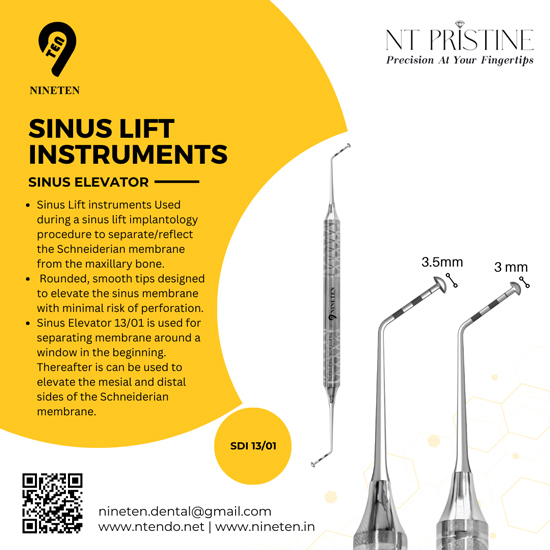
The Endodontic Instrument Sinus Lift Instruments – Sinus Elevator is designed to help you perform safe and controlled elevation of the Schneiderian membrane during sinus lift procedures. It supports both initial membrane separation and gradual elevation, making it useful throughout different stages of sinus augmentation.
Its rounded and smooth working tips allow gentle lifting of the membrane from the maxillary bone, helping you reduce the risk of perforation during delicate surgical movements. The dual tip sizes (3 mm and 3.5 mm) give you flexibility to work in different anatomical conditions with better precision and access.
You can use this instrument during lateral window procedures to separate, reflect, and elevate the membrane across mesial and distal areas with steady control.
Key points for your practice:
This instrument fits well in surgical workflows where precision, control, and safety are important during sinus procedures.
Choose this sinus elevator when you need reliable control and safer membrane handling during implant procedures. It helps you work with confidence in critical surgical steps.

