
Gum Disease in 2025: The Hidden Threat and How We’re Fighting Back?
You wake up in the morning, brush your teeth like always, and spit into the sink. A tiny trace of pink shows up in the foam. “Just brushed too hard,” you tell yourself.
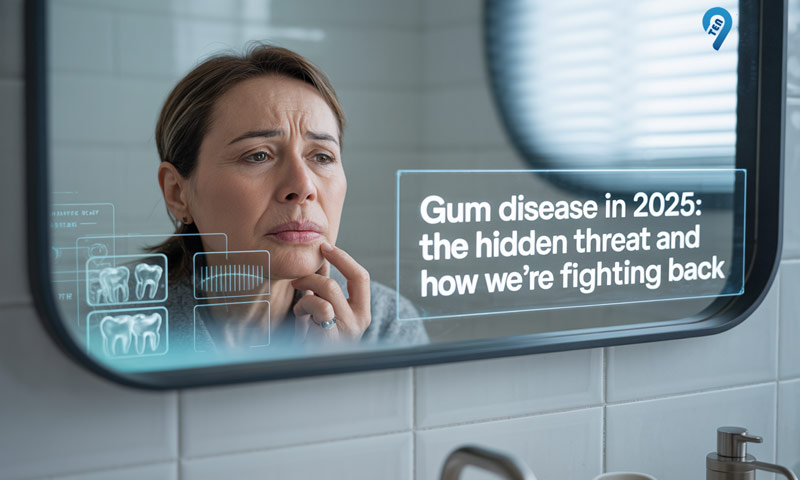
But what if that small sign is your body’s quiet cry for help?
In 2025, gum disease remains one of the most overlooked but serious threats to oral and overall health. As a dentist, I see it far too often—people ignoring subtle symptoms until they’re dealing with loose teeth, bone loss, or worse, systemic health complications.
But here’s the good news: this year, we’re equipped with smarter tools, better treatments, and a deeper understanding of how to spot gum disease before it takes hold. And if caught early, it’s entirely preventable and treatable.
The Quiet Beginnings: Early Signs You Shouldn’t Ignore
Gum disease doesn’t usually begin with pain. It starts in silence—soft, red gums, light bleeding when flossing, or persistent bad breath that no mouthwash seems to fix.
These might seem harmless, but they’re your gums telling you something’s wrong.

Thanks to advances in AI-assisted diagnostics in 2025, we now know that these early symptoms often appear months or even years before major damage. For example, researchers at the Tokyo Dental Institute recently developed a breath sensor that can detect sulfur-based compounds linked to early inflammation, often before gums visibly recede or bleed.
If you’re experiencing any of the following, don’t brush it off:
- Red or swollen gums
- Bad breath or metallic taste
- Bleeding while brushing or flossing
- Sensitive teeth or gum recession
- Looseness in your bite or tooth movement
Think of these signs not as problems, but as your opportunity. An opportunity to act before it’s too late.
A New Era in Diagnosis: Your Saliva Tells a Story
Until recently, dentists had to rely mostly on X-rays and physical probing to check for gum disease. But now, we’ve entered an era of personalized, science-driven diagnosis.

Today, a simple saliva swab can reveal a lot. Modern salivary kits analyze biomarkers like interleukin-6, a protein released during gum inflammation. Some tools even identify the exact bacteria causing the issue—tailoring treatment to you, not just a generic plan.
And with AI-based software like PerioVision 5.0, we can detect changes in bone density or pocket depth earlier than ever. These technologies don’t just help dentists—they empower you, the patient, to make decisions with clarity and confidence.
Also Read: Choosing The Right Toothbrush: A Dentist’s Guide.
Modern Treatments That Are Less Scary and More Effective
Gone are the days when treating gum disease meant painful surgery, stitches, and long recovery times. Today, our approach is minimally invasive, biologically smart, and designed to work with your body.
Laser Therapy: Gentle but Powerful
LANAP 2.0, the newest form of laser-assisted gum therapy, removes bacteria while stimulating the regeneration of gum and bone tissue. Patients report quicker healing, less discomfort, and often no need for anesthesia. In a 2024 study, healing was 50% faster compared to traditional methods.
Smart Home Care: Treatment at Your Fingertips
Imagine having a dental treatment in your drawer. That’s the reality in 2025. With FDA-approved smart trays, you can now apply prescription gels (like doxycycline) directly into gum pockets—without leaving your home. These trays sync with mobile apps to track your usage and progress, making gum care truly personal.
Regenerative Dentistry: Rebuilding What Was Lost
For advanced cases, we’re using cutting-edge biologics like Platelet-Rich Fibrin (PRF) and growth factors to rebuild lost gum and bone tissue. These techniques don’t just stop the disease—they help undo its damage. Clinical data in 2025 shows PRF-enhanced healing is up to 35% more effective than traditional grafts.
Probiotic Therapy: Healing Through Balance
We’re also looking at your oral microbiome—the community of bacteria living in your mouth. By introducing good bacteria through targeted probiotics, we can naturally outcompete harmful strains and restore oral harmony. It’s not just treatment. It’s long-term prevention.
Prevention in 2025: Smarter Tools, Simpler Habits
The best treatment is still prevention. But now, prevention is smarter.
Today’s AI toothbrushes track your brushing patterns, warn you if you’re brushing too hard, and ensure you’re not missing any spots. Some even analyze your brushing history to predict where you might develop problems next.
Meanwhile, digital dental care has exploded. Patients now send high-resolution photos or videos to their dentist for quick check-ups between visits. In rural areas, where access to care is limited, this technology is a game changer.
Nutrition also plays a huge role. In 2025, more people are turning to targeted supplements like Coenzyme Q10 and Vitamin D3, both of which are scientifically linked to improved gum health and bone density.
Also Read: Proper Way to Brush Teeth: Dentist-Approved Tooth Brushing Techniques for 2025.
Why This Matters More Than Ever?

Gum disease doesn’t just impact your mouth. Mounting evidence connects it to serious health issues—heart disease, Alzheimer’s, diabetes, and even adverse pregnancy outcomes. It’s no longer just about teeth. It’s about your total well-being.
Think of gum disease like a slow-burning fire. It doesn’t always scream for attention, but it quietly damages what’s most important—your health, your confidence, your smile.
Final Thoughts: Let’s Not Wait Until It Hurts
So, if you’re reading this and wondering whether to schedule that check-up… do it. If you notice bleeding gums or a new sensitivity… talk to your dentist. Today, you have more options and better care than ever before. And most importantly, you don’t have to wait until it hurts. Your smile is worth it.

